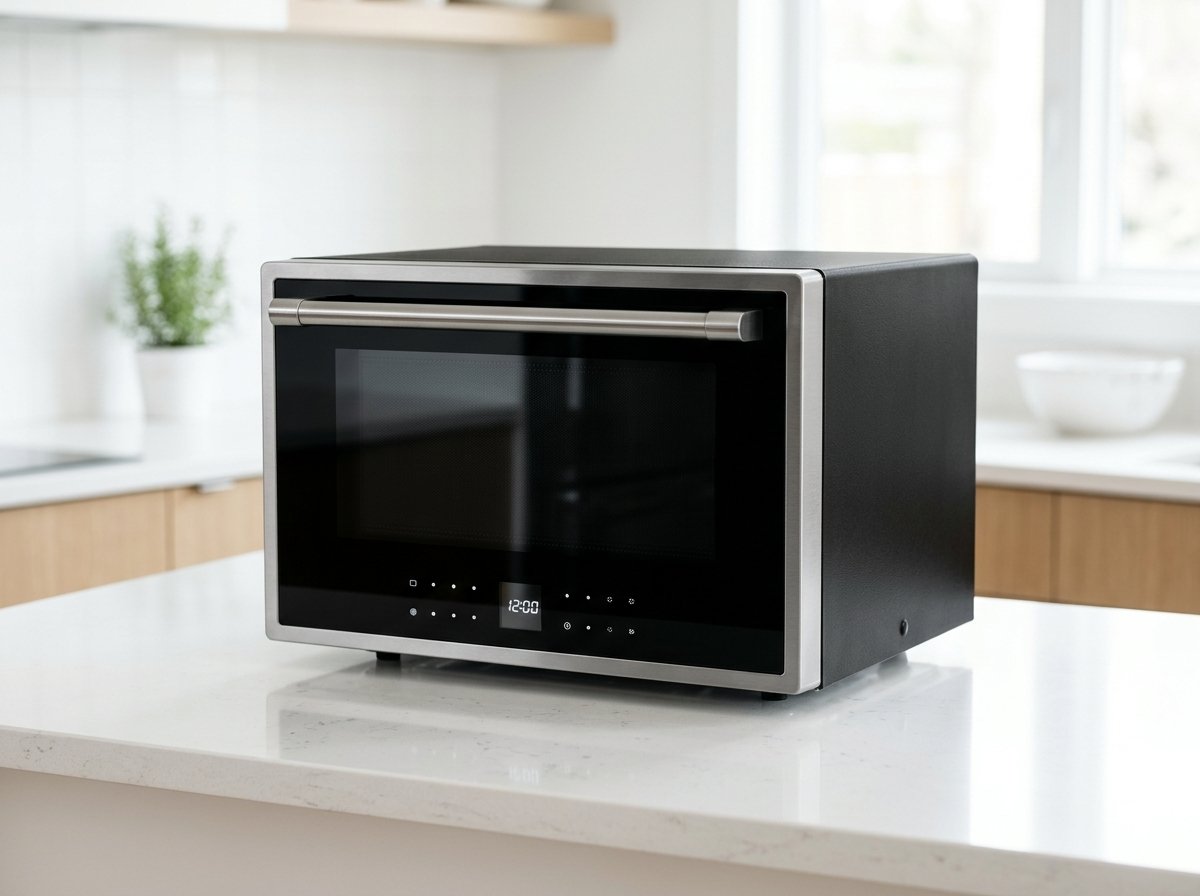
Why Microwave Repairs Require Trained High-Voltage Inspection
Even when unplugged, microwave oven high-voltage capacitors can retain dangerous electrical charge. Never open the outer cabinet yourself. Our technicians safely discharge the capacitor before testing the magnetron, diode, transformer, and door interlock switches.
Common Microwave Issues We Repair
| Symptom | Common Component | Service Action |
|---|---|---|
| Runs and spins, zero heating | HV diode, HV fuse, capacitor, or magnetron | Meter resistance & continuity test; replace failed HV part |
| Sparking or burning smell inside cavity | Grease-burned mica waveguide cover or magnetron cap | Cavity degreasing, waveguide mica replacement & antenna check |
| Unresponsive touch keypad buttons | Humidity-damaged membrane keypad or ribbon trace | Membrane keypad replacement & control PCB cleaning |
| Glass plate not rotating / convection fan noisy | Synchronous turntable motor or rear fan bearing | Motor winding check & coupler/motor replacement |
Related Guides & Links
- Read: Why Your Microwave Runs But Doesn't Heat (Safety Guide)
- AC Repair | Refrigerator Repair | Washing Machine Repair
- Goregaon East (400063) & Marol, Andheri East (400059) Branches | Contact & Directions
Microwave Oven Repair FAQs
Why does my microwave light up and spin the plate without heating food?
When the cavity light and turntable operate normally but food remains cold, the fault is usually in the high-voltage circuit — such as a blown high-voltage fuse, faulty diode, weak capacitor, door micro-switch, or failed magnetron.
Is sparking inside a microwave safe to keep using?
No. Stop using the microwave immediately if you see arcing or sparks. Common causes include a burned mica waveguide cover, chipped interior enamel, or a damaged magnetron antenna cap.